What are institutional investors missing in the public vs. private debate and why are companies taking longer to go public? How is the relationship of private capital and economic inequality playing out as it relates to high net worth family offices? In this latest episode of the Improving Alpha podcast we welcome Michael Ewens, Columbia Business School, to discuss his latest research on these topics and more. Be sure to tune in below.
Michael Oliver Weinberg, co-founder, Improving Alpha Podcast Series
Sponsored by:
.png?width=158&height=43&name=Alternatives-Watch-Retina%20(1).png)

Why are companies like SpaceX, Anthropic, and OpenAI delaying going public, and can this phenomenon be traced back to regulatory changes of the nineties? Can private market funding essentially dry up, leaving no alternative? How do these firms approach regulatory thresholds and what is the impact to strategic allocations by today’s leading LPs?
Michael Ewens, David L. and Elsie M. Dodd Professor of Finance, Finance Division and Co-director Private Equity Program, Columbia Business School, joins our latest episode of the Improving Alpha podcast and breaks down his own observations from his research on the public-private market debate, early stage pitching biases, private capital and US economic inequality, and the impact of PE ownership.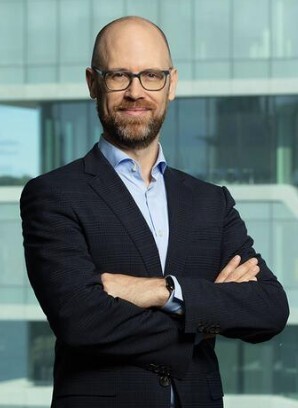
Highlights from Michael Ewens and host Michael Oliver Weinberg follow below.
- How can the lessons of the dot-com boom parallel the private capital market boom and influence what we see today in a huge pool of private capital across equity and debt markets?
- Are dual share class structures surging as it relates to the announcements of SpaceX, Anthropic, and others going public? What does that mean for allocators?
- From an alpha perspective, what is the impact of going public, and how do business owners navigate the crossing of regulatory public float thresholds?
- Are early-stage investors biased against female founders even, and what were some of the ‘rational’ reasons for these biases?
- What does Michael’s research reveal about private capital market expansion and the rise in US economic inequality? What are his thoughts on the democratization of alternatives?
- How can investors quantify intangible capital in a world of increasing technology across things like automation, robotics, and a startup’s IP?
- and more.Michael Ewens is the David L. and Elsie M. Dodd Professor of Finance at Columbia Business School and co-director of the Private Equity Program. He is also a Research Associate at the National Bureau of Economic Research (NBER), Associate Editor of the Journal of Financial Economics, Associate Editor at the Review of Financial Studies, Associate Editor at Management Science, Associate Editor at the Journal of Corporate Finance, and co-editor of the Journal of Economics & Management Strategy. He received a Ph.D. in economics from the University of California, San Diego. Since 2006 he has been a quantitative advisor for Correlation Ventures, a quantitative-focused venture capital firm. His research has appeared in the Economist, Bloomberg, and the New York Times. Prof. Ewens has taught private equity and venture capital finance at Columbia Business School, California Institute of Technology, Wharton School of Business, Carnegie Mellon University, and the University of California San Diego. From 2010 to 2014, he was on the faculty at the Tepper School of Business at Carnegie Mellon University, and from 2014 to 2022, he was on the faculty at the California Institute of Technology. He co-organizes the Columbia Private Equity Conference and the virtual Workshop on Entrepreneurial Finance and Innovation.
About Our Host: Michael Oliver Weinberg, CFA
For three decades Michael has invested directly at the security level and indirectly as an asset allocator in traditional and alternative asset classes. Most recently he was a Managing Director, Head of Alternative Alpha, on the Investment Committee, and a board member at APG, a Dutch pension provider. Previously he was the Chief Investment Officer at MOV37 and Protege Partners. Michael is also an Adjunct Professor of Economics and Finance at Columbia Business School, where he teaches Institutional Investing, an advanced MBA course that he created.
Michael is a published author, having written for The New York Times, international investment books, and other publications. Michael has been interviewed by the Wall Street Journal, Financial Times, CNBC, Bloomberg and Reuters. He is a frequent panelist, moderator and lecturer for investment banks, institutional and family office organizations, and business schools.
The information covered and posted represents the views and opinions of the guest and does not necessarily represent the views or opinions of Vidrio Financial, and/or our host, Michael Oliver Weinberg. The Content has been made available for informational and educational purposes only. The Content is not intended to be a substitute for professional investing advice. Always seek the advice of your financial advisor or other qualified financial service provider with any questions you may have regarding your investment planning.