Artificial intelligence is on the minds of many across the institutional investment space. From the development of frontier models to understanding AI execution and impact, where should investors place their bets? We welcome Farhan Ahmad to the Improving Alpha podcast to explore more on AI adoption, Asia's impact in the AI race to the top, social outcomes, and more. The self-described futurist and digital 'mixologist' gets into all of it in the podcast below.
Michael Oliver Weinberg, co-founder, Improving Alpha Podcast Series
How do the United States and Asia approach the expansion of artificial intelligence for the future? On one side of the world, you have frontier model development requiring massive compute and content ingestion, while the other side is looking at their internal strengths and figuring out where AI can have the greatest impact. As investors, how can we figure out a true ROI to place our bets on across regions of the world?
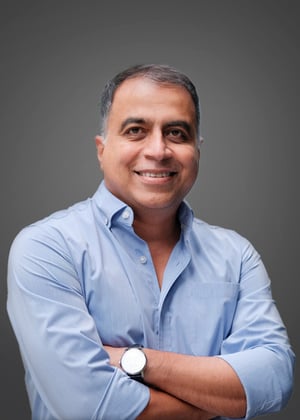
In this latest episode of the Improving Alpha podcast, host Michael Oliver Weinberg is joined by Farhan Ahmad, Former CEO of PayNet Malaysia, Three Time Entrepreneur, and MIT CSAIL Board Member, to discuss the nuanced approach of Asian AI model development, the concept of interoperability vs isolated development, ongoing AI adoption and improved social outcomes, and how the United States and Europe plan to stay engaged in this innovation.
Key highlights include:
- How is AI impacting small- to medium-sized businesses, and is there a valuable investor story to uncover?
- Can the US effectively compete with China when it comes to robotics, manufacturing, and autonomous vehicles? Will a new age of US manufacturing come into play if we can lower labor costs across the country?
- What sort of impact does the Chinese government have in mandating the development and rollout of AI across schools, banks, and other businesses? Is there a comparable national-level strategy for that rollout in the US?
- Does a national security threat exist in Chinese exports to the US that have embedded AI components?
- How does Malaysia’s ILMU differ from foundation models being deployed in the US and mainland China? Will smaller models be able to catch up with larger LLM models through distillation, and how do real world examples figure into these equations?
- How can the lessons at PayNet on shared rails and interoperability be applied to cross-border cooperation, especially when looking at Singapore and Vietnam?
- And more.
About Farhan Ahmad:
Farhan Ahmad is a three-time entrepreneur, technology executive, and former CEO of PayNet Malaysia, the country's national payments network. Throughout his career, he has founded and successfully exited three technology companies and held leadership roles across banking, financial technology, and digital payments in both the United States and Europe. While leading PayNet, he helped expand one of the world's most advanced real-time payment networks, significantly increasing its scale and strengthening cross-border payment interoperability across Asia. Farhan also serves on the board of the MIT Computer Science and Artificial Intelligence Laboratory (CSAIL), where he contributes to discussions at the intersection of artificial intelligence, technology, and innovation. His work focuses on AI adoption, financial infrastructure, digital transformation, and the practical application of emerging technologies to solve real-world challenges.
About Our Host: Michael Oliver Weinberg, CFA
For three decades Michael has invested directly at the security level and indirectly as an asset allocator in traditional and alternative asset classes. Most recently he was a Managing Director, Head of Alternative Alpha, on the Investment Committee, and a board member at APG, a Dutch pension provider. Previously he was the Chief Investment Officer at MOV37 and Protege Partners. Michael is also an Adjunct Professor of Economics and Finance at Columbia Business School, where he teaches Institutional Investing, an advanced MBA course that he created.
Michael is a published author, having written for The New York Times, international investment books, and other publications. Michael has been interviewed by the Wall Street Journal, Financial Times, CNBC, Bloomberg and Reuters. He is a frequent panelist, moderator and lecturer for investment banks, institutional and family office organizations, and business schools.
The information covered and posted represents the views and opinions of the guest and does not necessarily represent the views or opinions of Vidrio Financial, and/or our host, Michael Oliver Weinberg. The Content has been made available for informational and educational purposes only. The Content is not intended to be a substitute for professional investing advice. Always seek the advice of your financial advisor or other qualified financial service provider with any questions you may have regarding your investment planning.